The Ultimate Guide to Roof Ventilation: Boost Energy Efficiency and Prevent Damage
Is your attic hotter than a sauna in summer? Or does your roof groan under winter’s icy grip? You’re not alone. Many homeowners and small business owners don’t realize just how much roof ventilation impacts comfort, energy bills, and even the lifespan of the roof itself.
At Frakes Roofing, we’ve seen firsthand how a well-ventilated roof can be the difference between years of smooth sailing and costly emergency roofing repairs. This guide will walk you through everything you need to know—without the jargon, just the facts that matter.
Why Roof Ventilation Matters
Think of your attic like the lungs of your building. If air can’t flow in and out, heat and moisture get trapped. That’s when problems start—energy bills spike, mold grows, and your roof materials age before their time.
A properly ventilated roof:
- Helps regulate indoor temperatures year-round.
- Reduces moisture buildup, preventing mold and rot.
- Extends the life of your shingles, decking, and insulation.
- Cuts down on emergency roofing calls when storms hit.
According to the International Residential Code (IRC) and the National Roofing Contractors Association (NRCA), balanced attic ventilation is a best practice for both new construction and roof replacements.
Types of Roof Ventilation Systems 🛠️
Not all vents are created equal. Here’s a quick rundown of the most common types and how they work together:
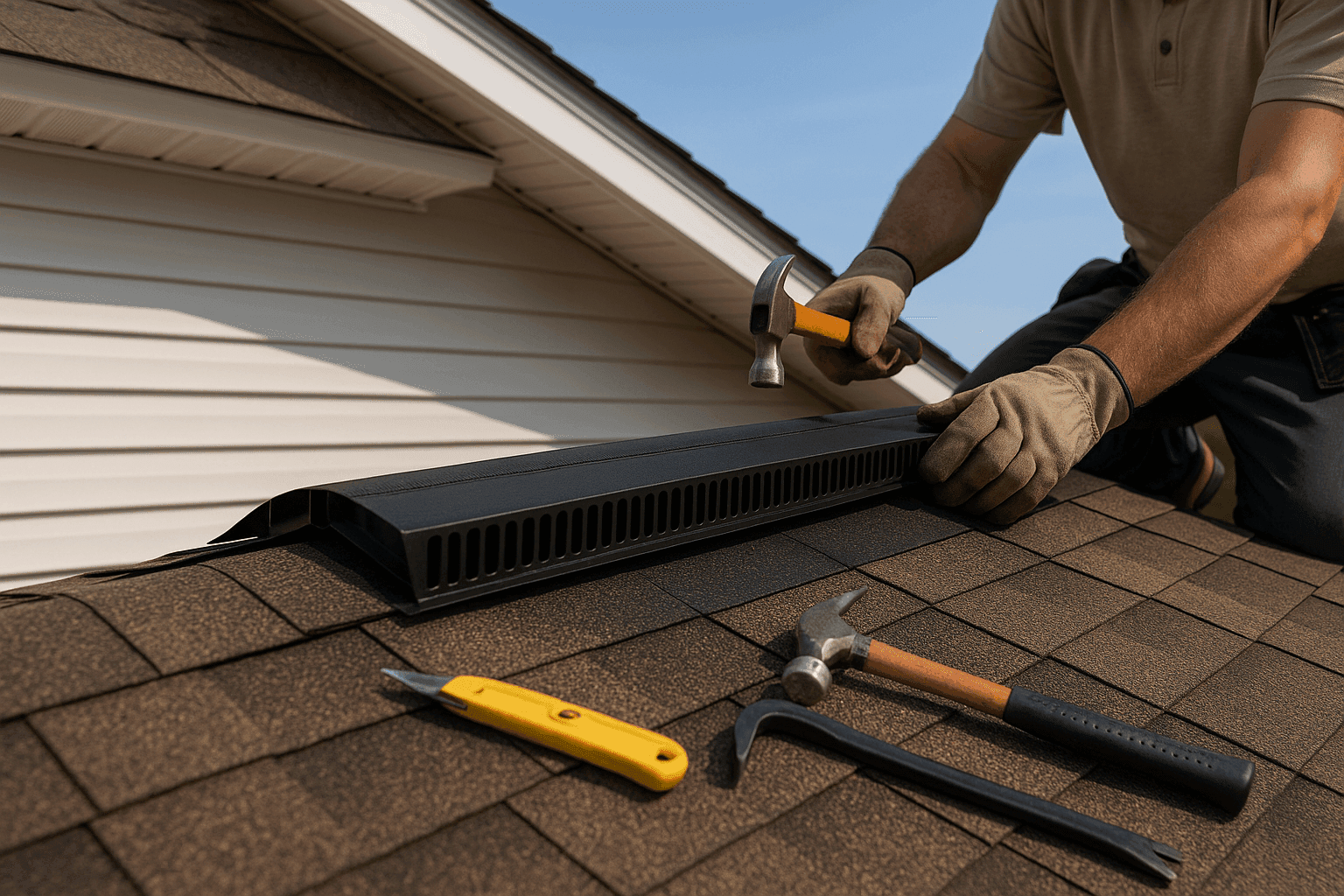
Ridge Vents
These run along the peak of your roof, letting hot, humid air escape from the highest point. When paired with soffit vents, they create a natural flow—like a chimney for your attic.
Soffit Vents
Installed under the eaves, soffit vents pull fresh, cooler air into the attic. This incoming air pushes hot air up and out through ridge or gable vents.
Gable Vents
Located on the ends of the attic, these vents allow cross-ventilation. They work best on roofs with a traditional, peaked shape.
Powered Attic Fans
Sometimes, natural airflow isn’t enough. Powered fans can help move air in larger or more complex roofs, but they need to be installed carefully to avoid sucking conditioned air out of your living space.
Roof Louvers and Box Vents
Simple, static vents placed near the roof’s peak. They’re often used in combination with other vent types for extra airflow.
How Ventilation and Insulation Work Together
Ventilation and insulation are like peanut butter and jelly—they just work better together. Insulation keeps your home warm in winter and cool in summer, while ventilation lets trapped heat and moisture escape so insulation can do its job.
Without proper ventilation, even the best insulation can get soggy, lose effectiveness, and become a breeding ground for mold. The U.S. Department of Energy recommends a balance: enough insulation to keep conditioned air inside, and enough ventilation to keep moisture out.
Seasonal Considerations: Summer Heat vs. Winter Freeze ☀️❄️
Summer
When the sun beats down, attic temperatures can soar over 150°F. Without ventilation, that heat radiates into your living space, making your AC work overtime. Shingles can bake from the inside out, leading to curling, cracking, and early replacement.
Winter
Cold weather brings a different set of problems. Warm, moist air from inside rises and gets trapped in the attic, condensing on cold surfaces. This can cause wood rot, mold, and even dangerous ice dams along the eaves.
Proper ventilation equalizes attic and outdoor temperatures, reducing the risk of damage in any season.
Signs of Poor Roof Ventilation
Worried your ventilation isn’t up to par? Watch for these red flags:
- High energy bills that don’t match your usage.
- Musty odors in the attic or upper floors.
- Visible mold or mildew on rafters or insulation.
- Peeling paint or blistering shingles.
- Ice dams forming along gutters in winter.
- Rust or corrosion on metal fixtures in the attic.
If you spot any of these, it’s time for a closer look.
Quick Safety Checklist for Homeowners and Small Business Owners
Before you grab a ladder, make sure you:
- Wear sturdy shoes with good grip.
- Use a stable, properly positioned ladder.
- Avoid climbing on wet or icy roofs.
- Never touch electrical wires or fixtures in the attic.
- If you see signs of structural damage, call a professional before proceeding.
Safety first—always.
DIY Roof Ventilation Checks
You don’t need to be a roofer to spot obvious problems. Here’s what you can do:
- Peek into your attic on a hot day. Is it much hotter than the rest of the building?
- Check for damp insulation or water stains.
- Look for daylight shining through vents (a good sign).
- Feel for airflow near soffit and ridge vents.
If anything seems off, jot down your observations. This info helps professionals pinpoint issues faster.
When to Call a Pro
Some things are best left to the pros, especially when it comes to your roof. Call for help if:
- You see signs of mold, rot, or structural damage.
- Your roof is steep, high, or has tricky access points.
- Ventilation issues have led to leaks or ceiling stains.
- You’re planning a roof replacement or major renovation.
Professional roofers follow OSHA safety standards and building codes, ensuring repairs and installations are done right the first time.
What Pros Do On Arrival
When you schedule a ventilation inspection or emergency roofing service, here’s what to expect:
- Thorough Attic Inspection: Checking insulation, airflow, and signs of moisture.
- Roof Surface Check: Looking for damaged vents, shingles, or flashing.
- Vent Calculation: Making sure intake and exhaust vents are balanced for your building size.
- Moisture and Mold Assessment: Identifying any hidden issues.
- Written Recommendations: Outlining next steps, from minor fixes to full system upgrades.
At Frakes Roofing, our goal is to give you clear, honest feedback—so you can make informed decisions.
Prevention & Maintenance Tips 🧰
A little upkeep goes a long way. Here’s how to keep your ventilation system in top shape:
- Clean soffit and ridge vents annually to remove dust, leaves, and nests.
- Check insulation for dampness after heavy storms.
- Inspect attic fans and replace filters as needed.
- Schedule a professional inspection every few years, or after major weather events.
- Trim trees near the roof to prevent debris buildup.
Prevention is always cheaper than emergency repairs.
Costs & Time Factors
Ventilation upgrades don’t have to break the bank, but costs vary depending on:
- The size and complexity of your roof.
- The type and number of vents needed.
- Whether repairs are minor (cleaning, minor sealing) or major (installing new systems).
Simple vent cleaning or replacement might take just a few hours. Larger projects, like adding ridge vents or powered fans, could take a day or two. Emergency roofing repairs are prioritized, but may require extra time if structural issues are found.
When It’s an Emergency
Sometimes, ventilation problems can’t wait. Call for emergency roofing services if you notice:
- Water actively leaking into your attic or living space.
- Large patches of mold or rot visible from inside.
- Sagging ceilings or roof decking.
- Severe storm damage that exposes vents or attic space.
Quick action can prevent further damage and keep your home or business safe.
FAQ: Roof Ventilation
How do I know if my attic is ventilated enough?
A well-ventilated attic should feel only slightly warmer than the outside air in summer, and free of condensation or musty smells year-round. If you’re unsure, a professional inspection can provide peace of mind.
Can I add more vents myself?
Some vents—like soffit or gable vents—can be installed by handy homeowners. But adding ridge vents, attic fans, or making changes to the roof structure is best handled by licensed professionals to avoid code violations or leaks.
Will better ventilation lower my energy bills?
Yes. Proper ventilation reduces the load on your heating and cooling systems, helping you save on monthly bills and extending the life of your HVAC equipment.
What’s the relationship between ventilation and insulation?
Insulation keeps conditioned air inside, while ventilation lets excess heat and moisture escape. Both are needed for comfort, efficiency, and roof health.
Special Considerations for Roof Ventilation
- Eco-Friendly Options: Modern vents and fans can be made from recycled materials or powered by solar energy, reducing your carbon footprint.
- Older Homes: Historic buildings may need custom ventilation solutions to preserve their character while improving airflow.
- Flat Roofs & Commercial Buildings: These often require specialized systems, such as mechanical ventilation or low-profile vents, to meet code and performance standards.
- Storm Damage: After severe weather, always check that vents are clear and undamaged—blockages can lead to rapid moisture buildup.
Remember, every building is unique. The right solution balances airflow, insulation, and your specific needs.
Ready to boost your roof’s health, cut energy costs, and breathe easier all year? Call Frakes Roofing now — or reach us anytime at 877-550-3398 .